

MENU
How to Install the Multifaçades on a Building’s Enveloppe
8 April 2026
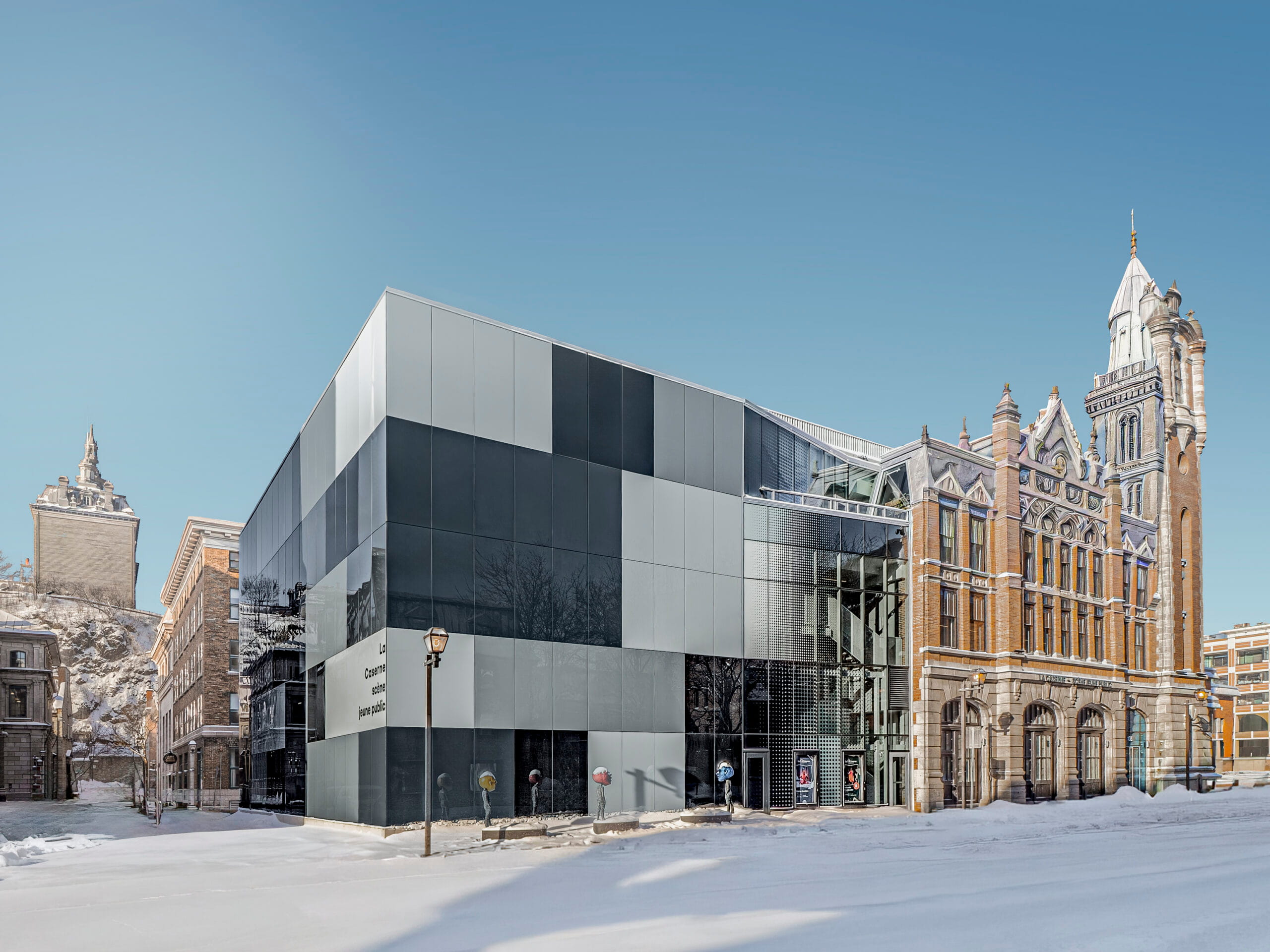
The installation of the Multifaçades system is based on a simple logic: renovating a building efficiently and simply, while delivering an outstanding finish. On site, the goal is to ensure smooth, well-coordinated, and well-planned execution so that each component of the system is properly integrated from start to finish.
An installation process that benefits from being centralized
Depending on how the contract is structured, certain steps may sometimes be handled by other trades, particularly the insulation and the Z-bars. However, from a site execution standpoint, it is preferable for a single subcontractor to take care of the entire scope. This approach improves the schedule, avoids demobilization, reduces interference between trades, and simplifies execution overall.
The main steps in installing the Multifaçades
In order, the installation steps are as follows:
- apply the membrane behind the fastening base
- install the insulation
- install the Z-bars
- secure the aluminum framing
- install the Multifaçades panels
- finish with the sheet metal flashings
This sequence provides a clear view of the site work. Every step matters, and none can be considered secondary to the others. Insulation, fastening base preparation, alignment, coordination, and planning all carry equal importance in the success of the installation
Conditions that must be met before starting
Even before the work begins, certain conditions must be in place on site. First, overlapping work must be avoided. On some projects, there may still be concrete formwork or other preliminary work in progress. It is therefore important for the work area to be clear so that teams do not interfere with one another. Sufficient space must also be planned on site to store the materials required for installation.
Preliminary checks that must not be overlooked
One of the most important checks before starting is to validate the building walls for in/out variations, in other words, to verify irregularities in the substrate. If the deviations are significant, it may be necessary to move further outward from the building to compensate for the areas that project more. This validation step directly affects the rest of the installation and must be carried out seriously.
Alignment, anchoring, and tolerances: the critical points
For a system like Multifaçades, measurements are extremely important. Each section must be verified, and the work must begin from the correct reference point from the outset. Alignment cannot be improvised. It depends on an accurate reading of the building and rigorous positioning.
As for anchoring, it is also essential to ensure that the areas where the system will be fastened comply with the engineer’s tolerances. This is particularly important when the existing substrate shows signs of weakness, such as old cracked concrete or overly deteriorated concrete blocks. In other words, the quality of the substrate must be validated before any fastening begins.
Waterproofing begins with the membrane
To ensure air and water tightness, the membrane stage is identified as one of the most important. It must be executed according to best practices before adding all the other Multifaçades components. This foundation determines the quality of everything that follows. A proper system installation therefore begins with a properly installed membrane.
Are some areas more sensitive than others?
There are no particularly sensitive areas during installation. This does not mean that certain joints can be treated lightly, but rather that, in the experience described, the system does not present a single recurring critical point that constantly comes back as a source of problems.
There are no major issues or recurring errors associated with this product. This suggests that when measurements are properly taken, the substrate is properly validated, and the steps are followed, the installation proceeds in a stable and controlled manner.
What sets Multifaçades apart on site
One of the elements that distinguishes Multifaçades from a curtain wall or a more conventional system is its flexibility of composition. It allows glass, an aluminum panel, or even ceramic to be easily incorporated within the same system, depending on the client’s choice. This versatility provides a great deal of freedom in executing the cladding while maintaining the same installation logic.
A system that offers execution advantages
From an installation standpoint, the system also offers a practical advantage on site. Preparation, which is often the longer stage, can easily be carried out by one worker. Then, when it comes time to install the panels, one more worker can be added and the team can achieve an impressive number of panels installed per day. It is one of the most productive systems from a scheduling standpoint.
Project examples
The Harold, Napper, secondary school, Gariépy de Sorel, Tracy, and PCL2 in Longueuil projects are excellent examples for illustrating, through images, the reality of installing Multifaçades in the field. Through these Vitralum references, it is possible to show the major stages of the process, from substrate preparation and membrane installation to the installation of insulation, Z-bars, aluminum framing, panels, and finishing flashings.
These project examples also highlight what makes the system strong from an execution standpoint: well-coordinated installation, rigorous measurements, proper alignment and anchoring management, and an efficient installation pace once preparation is complete.
Conclusion
Installing Multifaçades on a building is above all about following a rigorous, well-coordinated, and well-planned method. The success of the project depends on substrate validation, measurement accuracy, alignment quality, compliance with anchoring tolerances, and careful membrane installation before the rest of the system. When these elements are under control, installation can move forward efficiently and simply, while delivering a very high-end finish.
Tell us aboutyour project
Every project motivates and drives us to push the limits even further. Let’s collaborate to achieve exceptional and lasting results!
Contact us

